// The Return of the Webmaster
When my dear friend Pete first introduced me to web design back in the mid-90s, the term “Webmaster” was used to describe someone who was a hybrid designer, coder, and sysadmin. I narrowly missed that title (I know, gutted), but I did start out juggling Photoshop, BBEdit, Fetch, Explorer and Netscape to do my job.
Sometimes, if I was feeling reckless, I’d even edit code live on the FTP server, refreshing the browser window to test it! I’d learn how cool things were made by looking at source code and emailing people whose sites I admired. In those days I was one of the only ones in my local social group to have an email address, and it felt subversive, energetic, surprising, inspiring, optimistic. Flash came along, and things went brilliantly mad, then the pendulum swung back towards mundane.
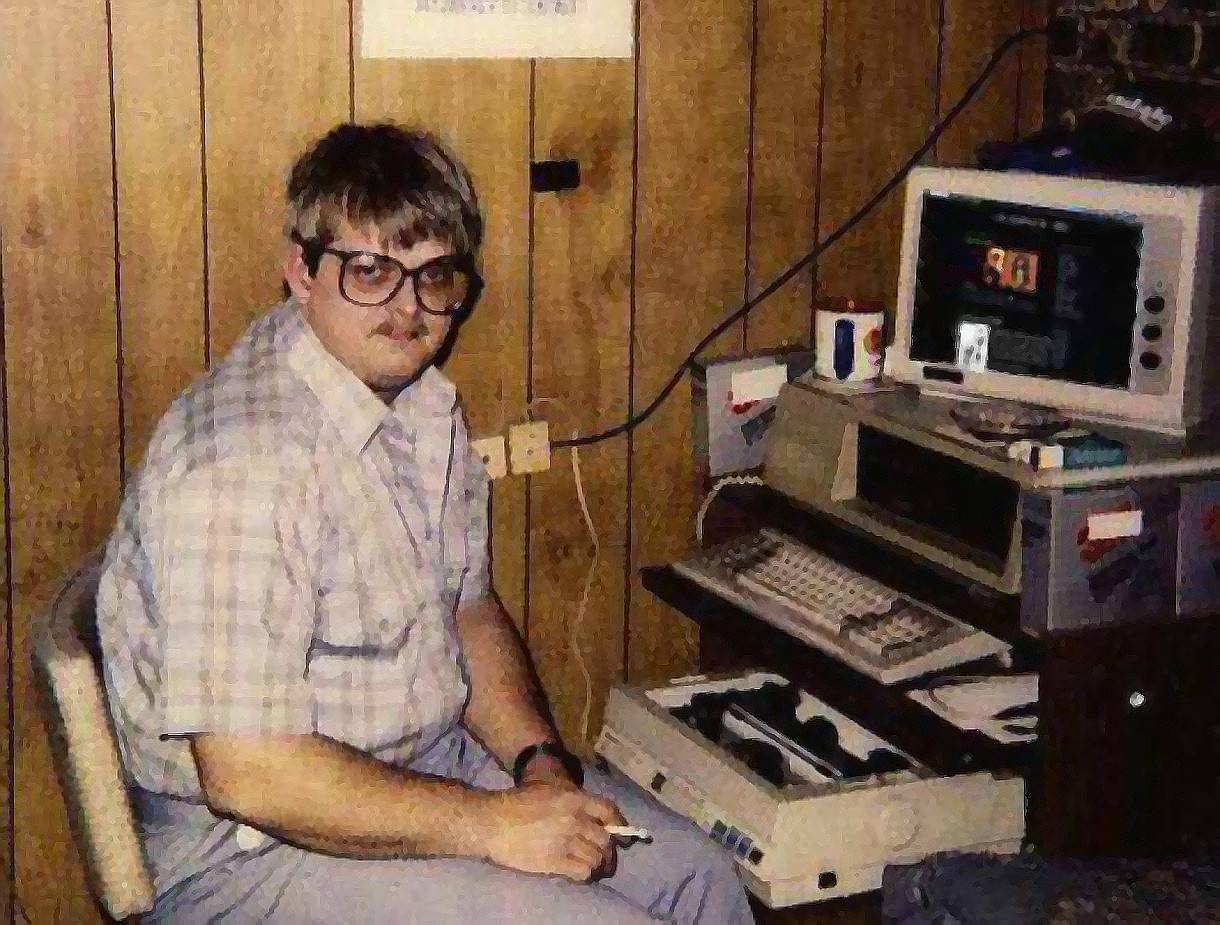
This is not me, or Pete.
From generalist to specialist
Roles split. Specialisms formed. I became a web designer, then a web developer, then an accessibility and usability specialist before learning about information architecture and the nascent field of user experience. I specialised in experiences that bridged desktop and mobile, then got into the “internet of things”, “ubiquitous computing” and “smart devices”. Products that can connect to the internet and work together to create complex services. When I first started telling people about this, they thought I was a bit mad, but I pressed on.
In 2011 I was talking about how the behaviour of AI would be perceived as “character” by its users, whether we liked it or not, and I proposed that one day we’d have user personas for “user agents” (machine users).
That work led to some cutting-edge projects I’m really proud of, but sadly can’t talk about.
From UX to product
Then, over the last decade or so, things started becoming beige. UX took a back seat to “product design” and the strategic part of the role moved to “product management”. You’re either one thing or another. I’ve been both. Information architecture is practically an occult practice these days. Esoteric methods in long-forgotten O’Reilly books. Product design often became more about operating Figma to create finessed (but generic) UI than it was about curiosity, ingenuity and pragmatism. Product management in its nature is more shark-eyed and business-focused than caring for the user on a human level.
I’d almost lost faith in the industry. But recently, things have changed.
From designing AI to AI-native design
I’m locked in again, and it’s because of AI.
I’ve been working with AI for the last decade, but lately, instead of fixating on the giant frontier AI models, I’ve built my own end-to-end local AI infrastructure. I’m “designing” it at every level, from the configuration of the servers to the choice of models, training smaller specialised ones, and planning how they collaborate and shape the user-facing parts of products. I’m designing how they evaluate their choices and autonomously improve based on observing interaction signals over time. Tick is the public-facing example of this approach. That’s what I mean by human-first, AI-native design. AI is the material, and I’m designing with it at every layer of the product.
It’s properly nerdy, and it feels subversive, energetic, surprising, inspiring, optimistic.
The return to generalism
These days I’m prompting with clear intent and incrementally refining in a hands-on way, using a suite of AI-enhanced tools I’ve built myself to help me think, do and learn. I’m using my whole brain again, and skills from my whole career.
But the intelligence, taste and pragmatism are mine. AI is just a tool to help me go much further. A “bicycle for the mind”, as Steve Jobs famously said.
It feels like the energy of the early days. Maybe it’s because I was there the first time that I’m enjoying this so much.
The industry is still working with the old job titles, but the work has changed. I saw a survey about AI the other day, and it began by asking what your role is. I couldn’t progress because I was simultaneously all the things and none of the things.
People keep saying design is dead. It’s actually become much more interesting. They just haven’t noticed yet.
I’m hearing murmurs of “Product Team of One”, so maybe the old role of Webmaster is back, without the cool name.
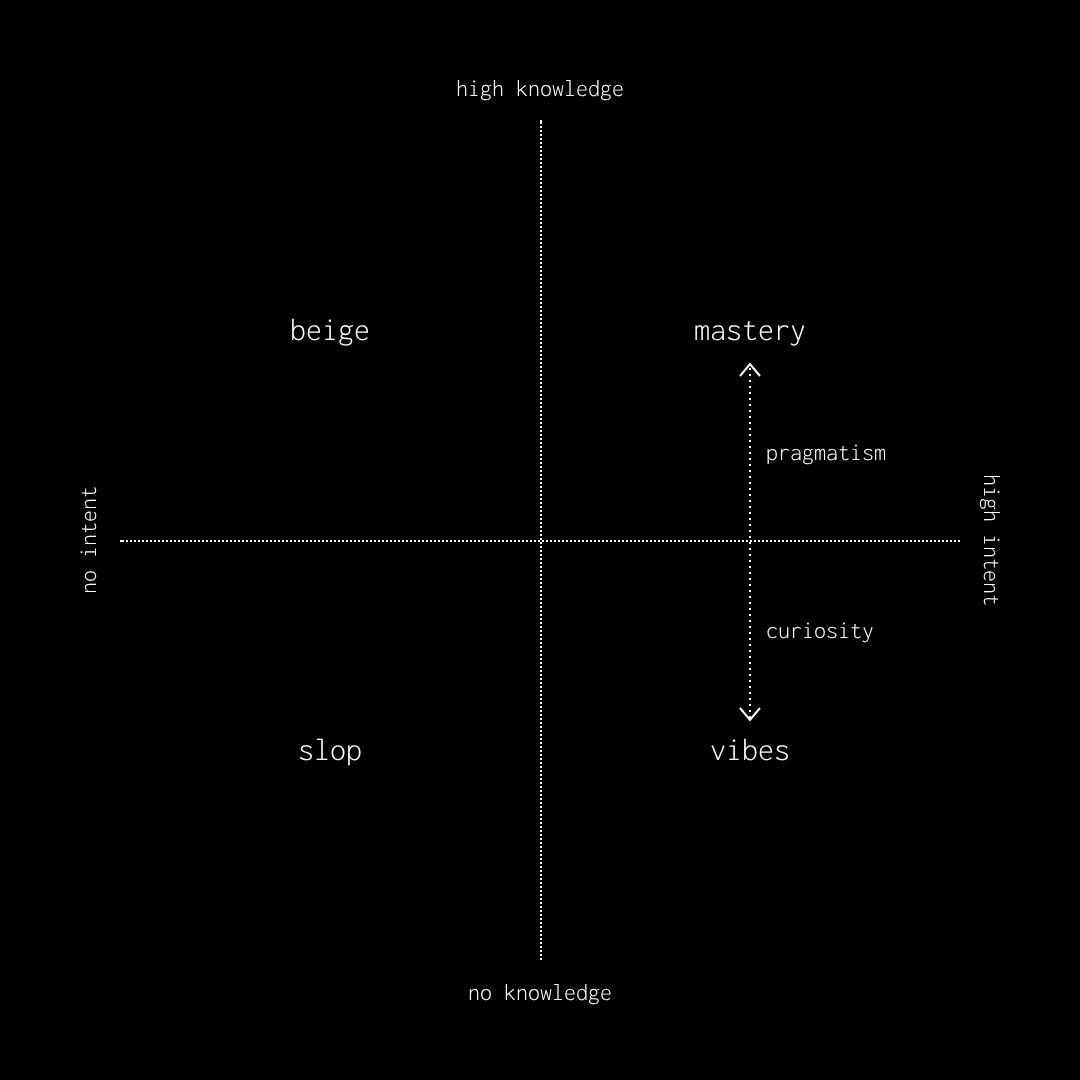
This is a diagram I use to show how I work with AI. The top-right quadrant is where I aim to be, but the bottom-right quadrant is where I tend to learn the most.
Where to next?
If you’re looking to work with someone like me, I’d be very keen to talk.
In the early days of the web, it was all about being proactive to find the others. Some of my closest friends are people I met this way. If you’re reading this and you’re interested, excited or feel the same way as I do, you should probably get in touch.
I'd love to tell you more. Let's work together.