// Proof of Life
It’s been a while. This is where I’m at.
A long overdue check-in covering sobriety, why I’ve mostly fallen out of love with social media, and why I think the friction we’ve been so busy optimising away is often the best part.
Also: post-optimal objects, constraints, eating frogs, and a clock that tells the time in poetry.
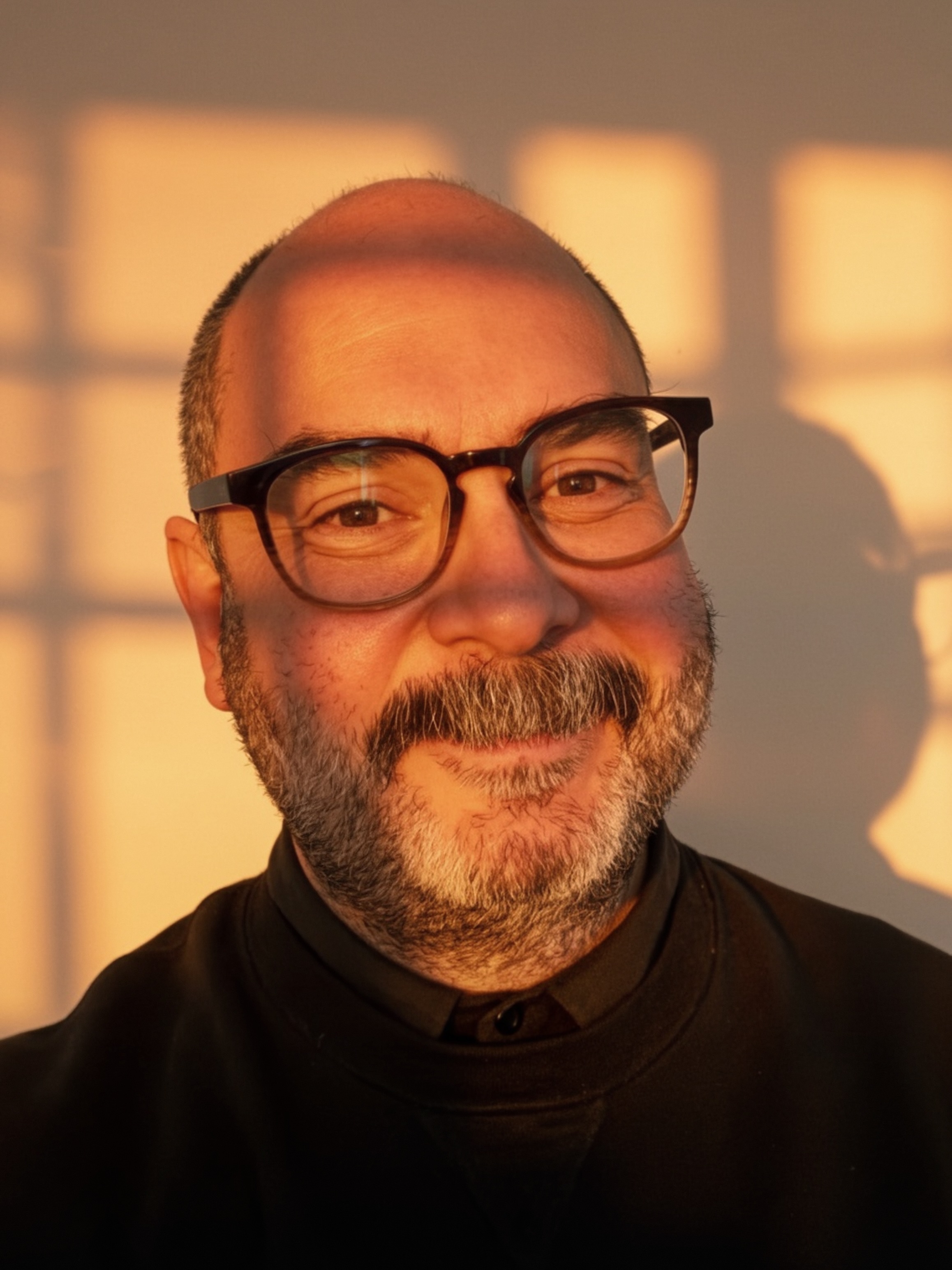
This photo is AI-enhanced to simulate location and lighting. The happiness it conveys is genuine.
I’ve not been posting on social media beyond sharing the odd story here and sharing content relevant to the “random walk” of my brain over on @specific_interests.
There’s been a lot going on with family, work and my health, and I’ve been keeping myself to myself for the most part. I avoid social situations I wouldn’t enjoy and socialising with folk I feel uncomfortable around. This means I don’t “get out” much, but when I do, I usually have a great time. Previously, I’d have used drink to wash away the discomfort, but now that I’ve been sober for over three years, I’m a lot more in tune with my own needs and will just duck out if I’m not enjoying myself.
Sobriety doesn’t mean I’ve become a puritan, though. I’ve not opted out of the things that matter to me; in fact, I’ve had transcendent club experiences and danced all night without the need for chemical enhancement, precisely because I’ve been selective about where I go and with whom I go. Shout to Margate Arts Club for reminding me this is possible more than a few times, and more recently, Optimo and The Ransom Note for the amazing Watching Trees festival a few weeks ago. I also don’t mind being around lovely folk that are drunk or high or whatever. I pick up on their energy and enthusiasm, and it’s great.
I don’t do social media in a broad sense, but I still enjoy Instagram a little too much. I’m really trying to cut down. It’s unhealthy for me. It’s worse than smoking, and it’s harder to manage, which says a lot about the way it’s designed and the intent behind it. The muscle memory of reaching for Instagram in the “between moments” is the same as reaching for a packet of smokes and a lighter. I’m very aware of how bad it is, but I can’t stop. The firehose of brain rot, catastrophe, and doom is the most negative engagement mechanism possible, and it’s like catnip to the ADHD brain, tuned to connect weak signals to reveal patterns.
I’ve also largely fallen out of love with posting curated details of my day-to-day life for others’ attention. I don’t really see what it achieves other than farming fair weather likes for dopamine. I feel that behaviour was based on a need for connection, which has since given way to comfort in myself. Go me, I guess. Shout out to my therapist.
Posting half-finished music to Instagram is unhealthy, too. I’ve observed that when I share something, I get likes, the dopamine hits, and then my brain is like, “cool, next!” It’s toxic to actually finishing anything, and, in that respect, has a more negative impact on self-esteem than the dopamine from likes.
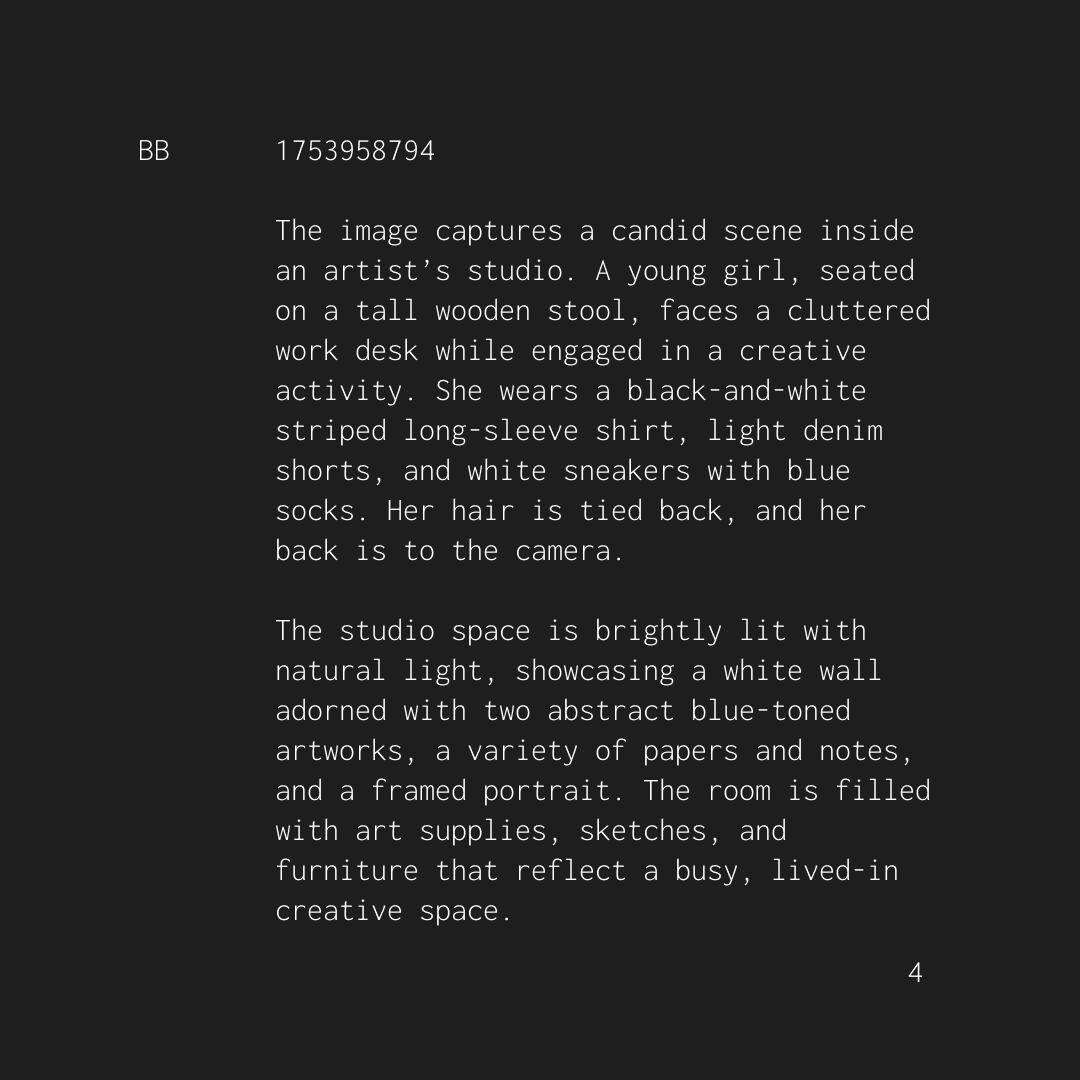
When it comes to photography, the experiment I’ve been running over the last year or so, where I’m getting AI to summarise photos as text, has been really interesting. I enjoy the description more than the original photo, even in retrospect. I’ve been thinking a lot about friction vs reward and how sparking the imagination is far more powerful than the instant hit of a photo. Effort is cool because the reward is often better.
This is one of the classic UX books.
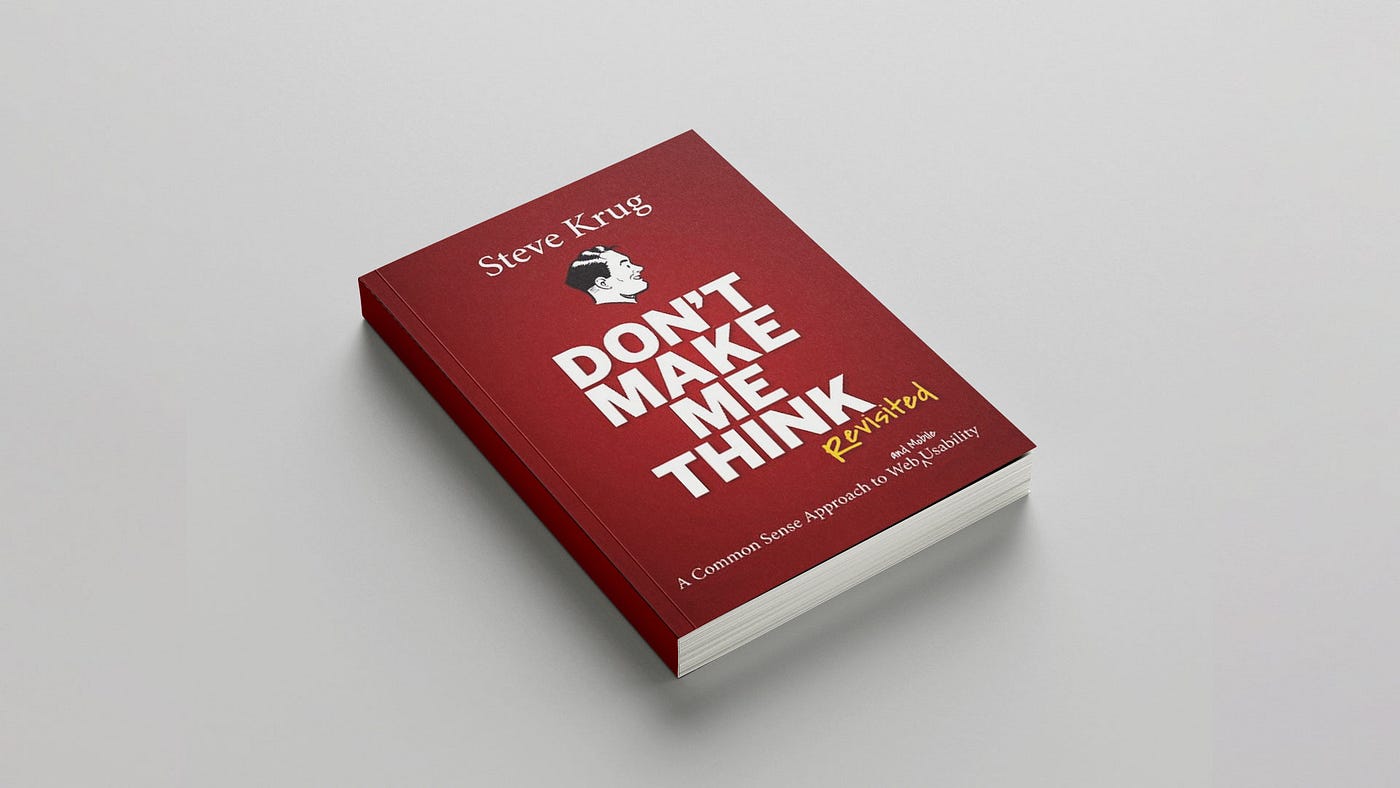
No, make me think.
Here, for example, is the AI-generated description of the photo accompanying this essay:
A middle-aged man with a close-cropped beard, salt and pepper at the chin, wearing large dark-framed glasses and a black sweater over a dark shirt. He is lit by warm late-afternoon light coming through a window to his left, casting a grid of soft, square shadows across the wall behind him. He is looking directly into the camera with a slight smile. He looks comfortable. He looks like someone who has recently made a decision he feels good about.
The photo shows you a happy face.
The description sparks your imagination in a far more magical way.
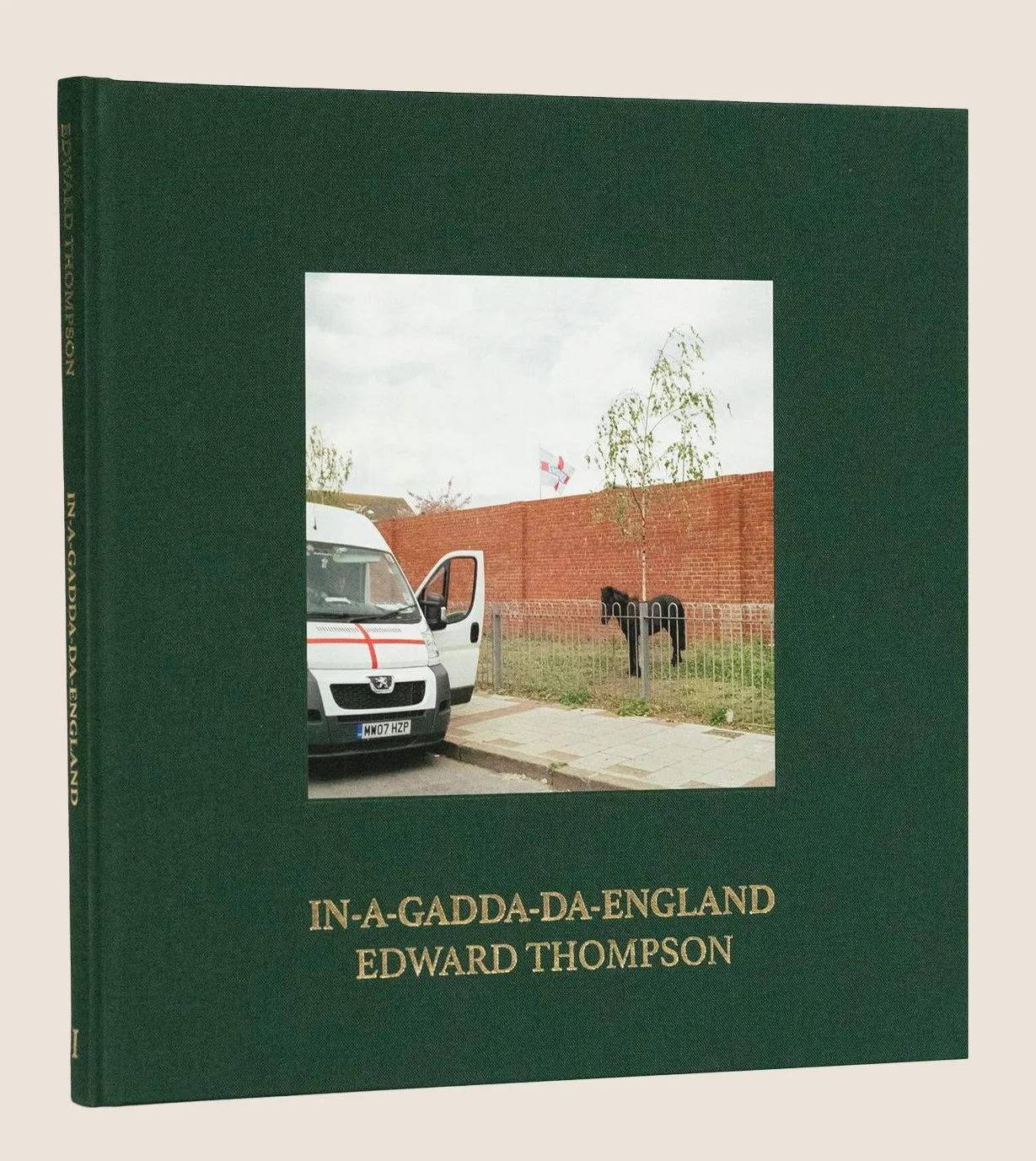
This isn’t me being down on photography as a medium. My friend Ed Thompson is a photographer, and his photos fire up my imagination in ways that are genuinely hard to describe. What he does is something else entirely. At first glance, you see a scene. If you put in the work, you notice the magic. And it is magic, in the truest sense of the word. Ed’s photos reward the effort you bring to them.
The magic in Ed’s work is so sublime that an AI description would be utterly unable to understand or replicate it. It would describe the scene and completely miss the point. That’s not a limitation to be fixed. That’s the measure of how good the work is. It exists beyond the reach of analysis. It’s visual poetry, and visual poetry doesn’t survive being explained. It has to be felt.
I’ve noticed something this year. The things that have mattered most have all had friction. The club night I nearly didn’t go to. The track I sat with for days, weeks, before it clicked. The conversation I had to be sober to actually hear.
None of them was optimised.
All of them were worth it.
Post Optimal
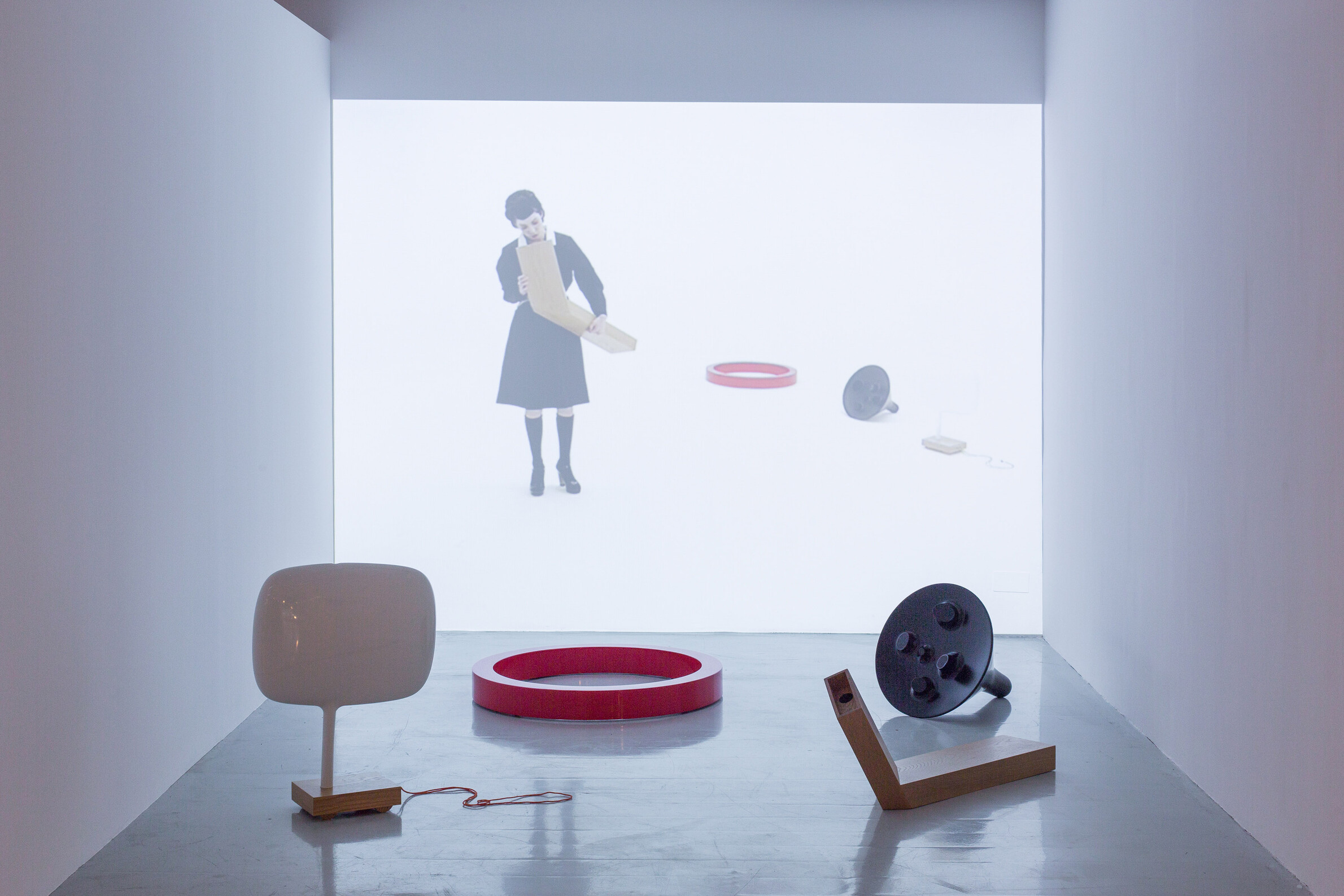
The idea of post-optimal isn’t new. Interaction Designers Anthony Dunne and Fiona Raby introduced the concept of the post-optimal object in the late nineties. First formalised in Dunne’s 1998 PhD thesis at the Royal College of Art and reaching a wider audience in his 1999 book Hertzian Tales, their definition was precise: a post-optimal object transcends mere technical and commercial optimisation. Rather than focusing on maximum efficiency or usability, it prioritises critical and aesthetic engagement. It provokes thought, challenges the status quo, and questions the social and cultural implications of technology.
That feels urgently relevant now in a way it perhaps didn’t in 1999. We live in a world of homogeneous hyper-optimisation, where every surface has been buffed smooth, every edge removed, every point of friction engineered out in the name of convenience. The result is a world of soulless things that feel devoid of care and treat us like corporate employees with targets to meet. Strip mining us for value at every turn. Post-optimal is the antidote. It’s accepting that the friction we’ve been so busy buffing out was often the magic that made the experience worth having.
The marketing side of the design industry is now writing about “joyful friction.” Whether that’s a good thing or the beginning of its flattening into a LinkedIn trend remains to be seen.
Post-optimal is a practice. Knowing where the shortcut is and choosing not to take it. It’s not an excuse for poor design; it’s quite the opposite. Post-optimal is friction consciously applied to increase the payoff. Not because difficulty is virtuous, that’s puritanism with better branding, but because the friction is often load-bearing. Remove it, and the whole thing gets lighter in the wrong way. The straight-up TLDR version is just: life is better when you make an effort. But that sounds like a poster in a gym changing room. The reason it’s true is more interesting than the statement itself.
Constraints
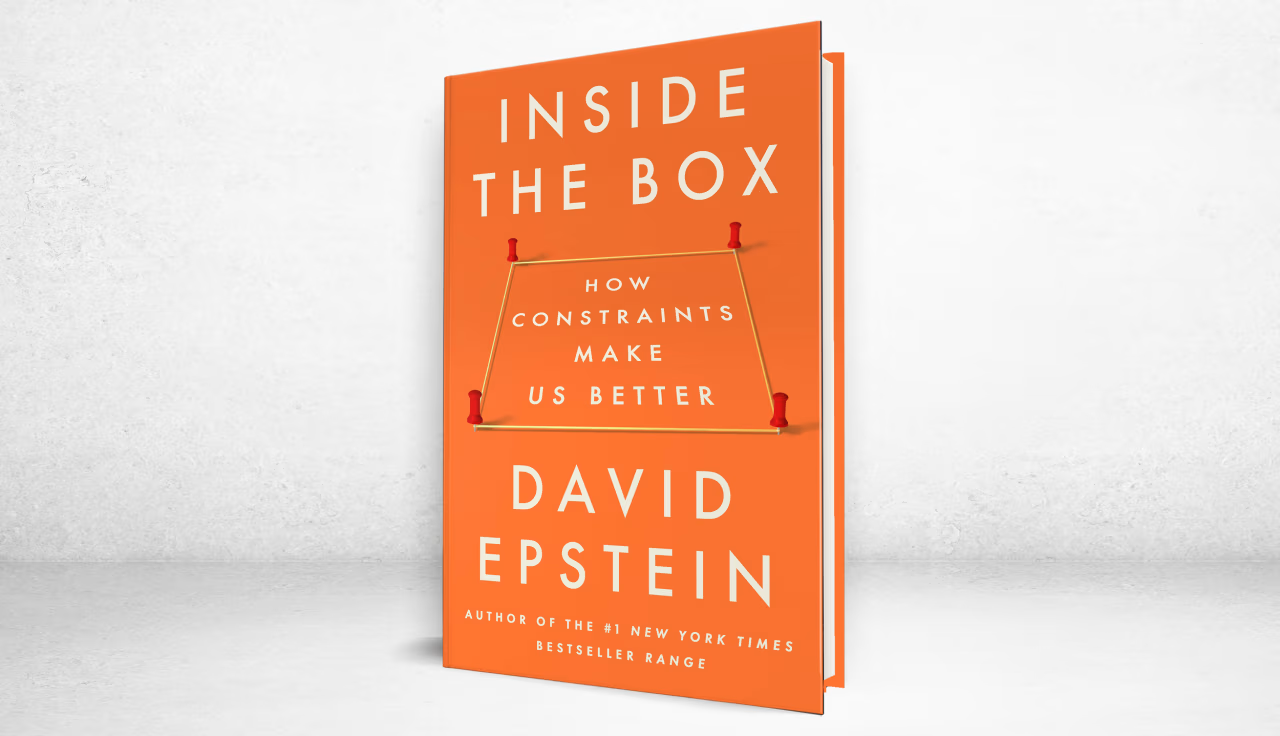
Constraints make things interesting.
There’s something related to this that I’ve been thinking about a lot lately. Constraints. Russell Davies reminded me of this recently in one of his brilliant YouTube videos. The idea that limitations, and sometimes self-imposed ones, make you think harder and more creatively and tend to produce better work in the long run.
Put work into the work.
I learned this the hard way at art school. In a life drawing class, my tutor watched me fussing over detail and took my charcoal stick from me. Replaced it with a piece so large that detail was practically impossible. All I could do was work in big, broad strokes. The work I produced was far better as a result. I hated it at the time. I’m eternally grateful for it now. The constraint wasn’t the enemy of the work. It was the making of it. That was one of the best learning experiences of my life.
Eat The Frog
There’s another concept that’s recently found its way into my daily life. Eat the Frog. My friend Matt Webb introduced me to it. The premise, borrowed from Brian Tracy’s book of the same name, is simple. If you have a delicious meal and one of the dishes is a frog, eat it first. Get it out of the way so you can enjoy the rest without it hanging over you. I’ve built it into my mornings. There’s a thirty-minute slot in my calendar called Eat The Frog. It’s where I do the thing I’d otherwise procrastinate over. Pay the bill. Call the accountant. Write the difficult email. Deliver the bad news. Once the “frog” is eaten, I can start the day with a genuine sense of achievement and ride the dopamine wave from there. It’s confronting the friction head-on. The harder path to the better feeling.
This is especially true when it comes to creative work. AI will give you a shortcut to output, but the journey to get there is where your work becomes yours. The wrong turns, the happy accidents, the thing you tried that shouldn’t have worked but did. That’s not inefficiency. That’s the process that produces the thing only you could have made.
The making is the thinking.
Leave it all to AI, and you get from A to Z fast, but you get something competent and entirely derivative. That’s not a criticism of the tools, it’s just what they are. AI is built on the analysis of everything that already exists. It knows the middle of everything. Left to its own devices, it trends toward the mediocre, toward the average of all human output, which is a strange and flat place to aim for.
The effort is the point.
The mistakes are how evolution happens. Your influences, your mistakes, and your hard-earned taste are your voice. Hand any of that off, and you’re giving away the spark that makes the work worth making.
Poem-1
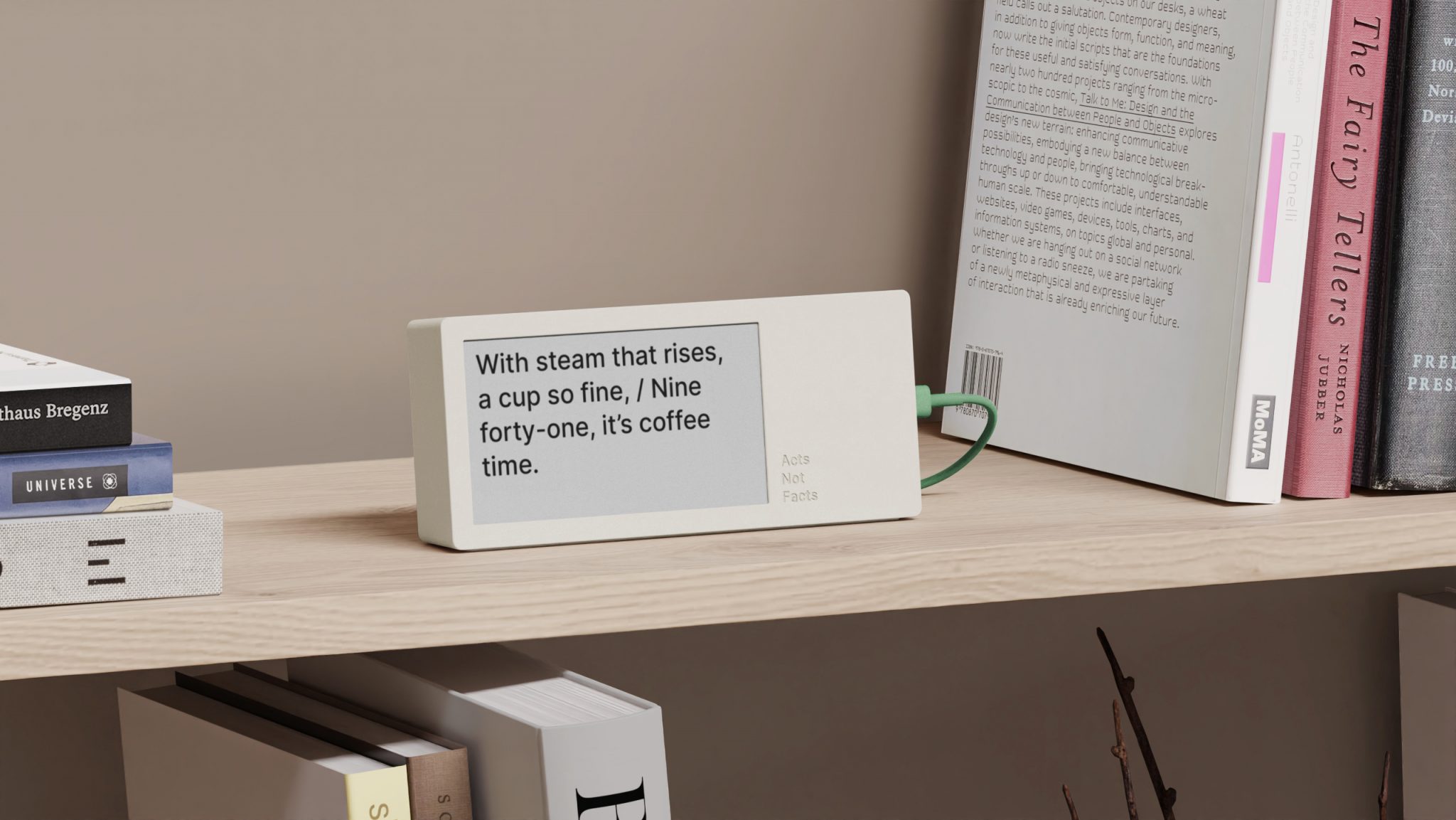
The same Matt Webb has built something that perfectly crystallises all of this. Poem-1 is a clock that tells the time in AI-generated poetry. It is not the best way to tell the time. That’s the point.
The slight friction of establishing what time it is, parsing a few lines, letting the image resolve, is more than counterbalanced by the reward. The glimmer you get for having read its little poem. I’ve found myself actually looking forward to checking the time, which is not something I’ve ever said about a clock.
The choice of e-ink for the display is wonderful, too. Not colour, not particularly high resolution. Low power consumption and a slight blink as it refreshes, which gives it an unexpected sense of character. It shouldn’t work as well as it does. It works because of what it isn’t, not what it is. Poem-1 is a beautiful expression of what post-optimal could mean for consumer products. The shortcut was always available. Matt just decided the longer road was more interesting. Hold tight, Matt.
Proof of Life
Which brings it back to where this started. Proof of AI-enhanced life. AI has not replaced life. The post-optimal approach to AI is the same as the post-optimal approach to everything else. You don’t let it remove the friction that matters. You use it where it serves you, and you stay in the driving seat for the parts that are actually yours to do.
The photos become descriptions become imagination become something only you could have made of them. That’s the point.
Artificial Intelligence is useful. Conscious friction is what makes things good.
The work itself is still important.
I'd love to tell you more. Let's work together.