// My Reconditioned iPod
I go for walks without my phone now. Just me and whatever I loaded before I left the house.
Second of five, following on from The Intention Economy. What a deliberately limited piece of technology teaches you about choosing what you want, and a subway ad that stumbled onto the same idea by accident.
Also: a walk without a phone, a search that makes you remember the name of the thing you’re after, and a Game Boy with a heart drawn on it.
The iPod
A year or so ago I bought a reconditioned iPod. Not as a nostalgia exercise. As an act of self-defence.
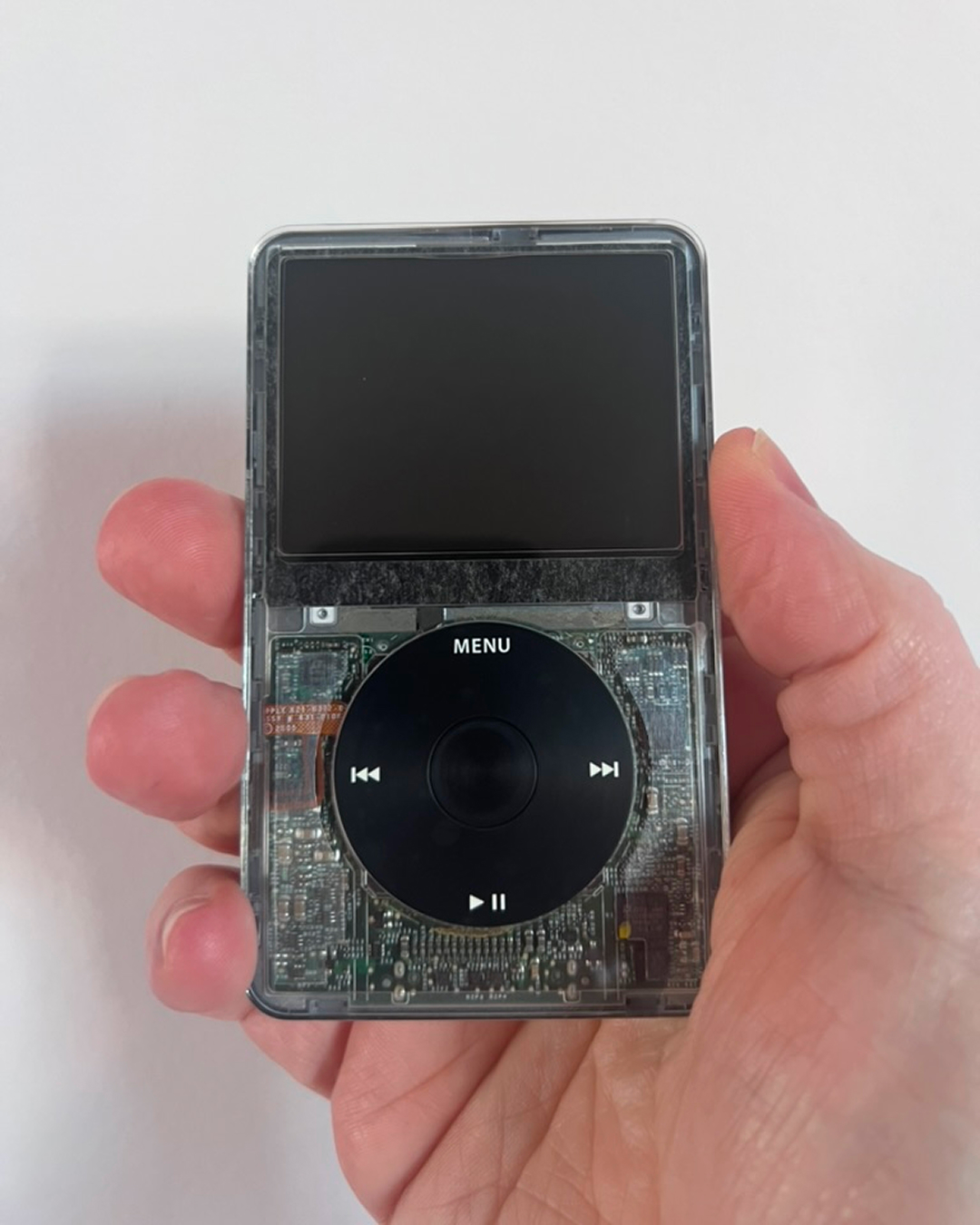
I go for walks without my phone now. Commuting is calmer. The pull of the notification, the reflex to check, the low-grade anxiety of being reachable. Gone. Just me and whatever I loaded before I left the house.
What I wasn’t expecting was what the limitations would teach me.
The UI is clunky because it wasn’t designed for “engagement”. The search is ok, but very straightforward. If I want to find something I have to know what I’m looking for, and I have to remember the name of it. I can’t just let an algorithm surface something. I have to choose music with intent.
It’s changed how I listen. I’m more deliberate about what I put on it. I think about what I’m in the mood for before I leave the house. I sit with albums properly, because skipping around is more effort than it’s worth.
The shortcomings are the feature. The friction is doing exactly what it’s supposed to do. It’s forcing the moment where I have to know what I want.
It’s also changed how I relate to the music itself. It feels like the main act again. Which is what it always was, before we decided that was too much to ask of people.
An iPod is a personal hack against enshittification. Small in scale, no leverage over the platforms themselves. Genuinely interesting to live with.
It’s a metaphor, if anything.

Coincidentally, today I saw a post on Janus Rose’s Bluesky. A subway ad for Backmarket, the refurbished electronics marketplace shows a pink Game Boy under the tagline “AB > AI.” Someone had drawn a heart on it. Rose called it interesting anthropologically, especially after the Friend ads got covered in graffiti. Someone stopping to add a heart to an anti-AI ad is this whole post in one image.
I'd love to tell you more. Let's work together.